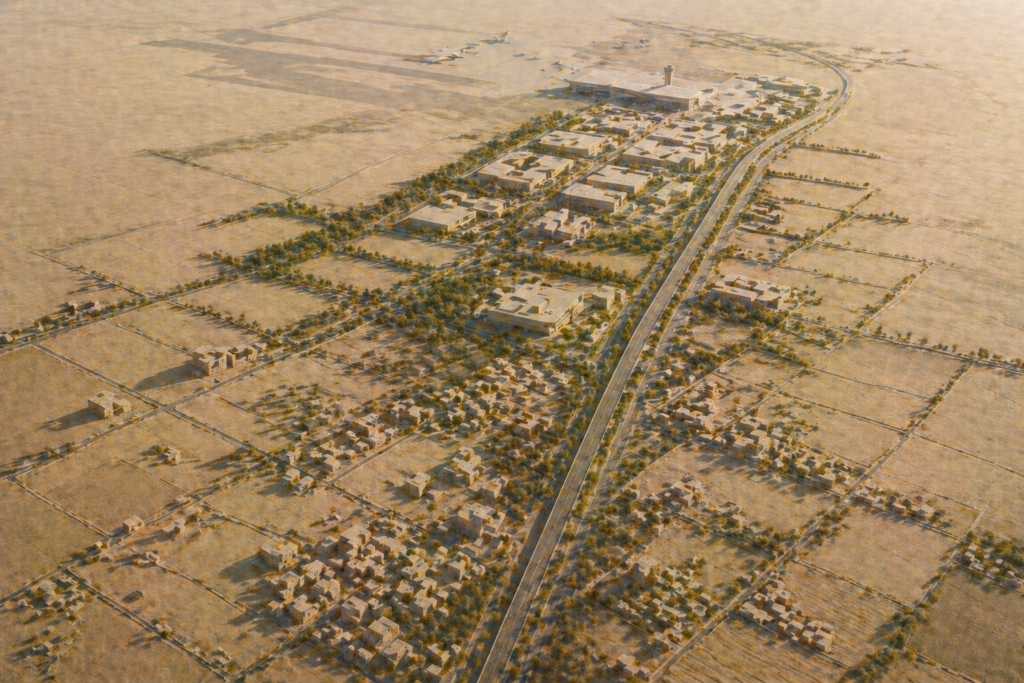
Contextual Opening
Our wider analysis of Bangalore’s peri-urban frontier identified jurisdictional friction and ecological constraint as primary risk categories for development capital at the metropolitan edge. This memorandum examines a third risk category that is equally consequential but more deeply embedded in the social history of the agricultural landscape: the fragmentation of agricultural land ownership through successive generations of inheritance without formal partition, producing an ownership structure that is simultaneously concentrated in family relationships and dispersed across multiple legal interests whose reconciliation is a prerequisite for any clean conveyance.
Agricultural land fragmentation in the peri-urban taluks surrounding Bangalore is not an aberration or a legacy problem that time will resolve. It is the structural condition of the land that is entering the development pipeline and that will continue entering it for the foreseeable future. Every agricultural parcel in the Anekal, Hoskote, Devanahalli, and Doddaballapur taluks whose development potential has been unlocked by metropolitan growth carries an inheritance history whose complexity is proportional to the number of generations the land has been held in joint family ownership without formal partition. Understanding this complexity is not a preliminary step before real land investment begins. It is the central analytical challenge that determines whether development capital converts to built environment or dissolves in litigation.
The System Mechanism
Agricultural land fragmentation operates through the interaction of three legal mechanisms under Hindu personal law. Joint Hindu family coparcenary ownership, whose structure was examined in STALAH’s Pillar I analysis of coparcenary claims, creates undivided interests in ancestral property that do not automatically separate into individual shares upon the death of a coparcener. The deceased coparcener’s share is absorbed by the surviving coparceners through the right of survivorship rather than descending to heirs through inheritance, until a partition of the joint family property is formally effected.
The Hindu Succession Act 1956, as amended in 2005 to grant daughters equal coparcenary rights, expanded the class of persons with legal interests in joint family property in ways that were not fully documented in the revenue mutation records of the period immediately following the amendment. Daughters of coparceners who had not previously asserted interests in ancestral agricultural land began doing so as awareness of the amendment’s effect spread and as land values made the assertion financially meaningful. The resulting expansion of the potential claimant pool for agricultural land transactions represents a systematic increase in the complexity of coparcenary clearance for transactions involving land whose ownership history extends through the post-2005 period.
The Hindu Undivided Family structure, through which many agricultural holdings continue to be managed for revenue and cultivation purposes, maintains the formal unity of the holding in administrative records while the beneficial interests have fragmented through successive generations of inheritance, adoption, and family change. A revenue record showing a single HUF name as the occupant of an agricultural survey number may conceal a coparcenary whose current membership includes fifteen or twenty individuals across three or four generations, each of whom must be identified, located, and whose interest must be either included in the vendor’s transaction or confirmed as having been extinguished through a valid partition.
The Administrative and Physical System
The Bhoomi portal’s Record of Rights, Tenancy and Crops extract provides the starting point for ownership identification but is structurally inadequate for the complete genealogy mapping that fragmented ancestral land requires. The RTC shows the occupant name and the nature of occupancy, but it does not disclose the composition of the HUF or joint family whose name appears as the occupant, the number of living members whose interests must be reconciled, or the inheritance history through which the current occupancy was established.
Revenue mutation records for agricultural land in the peri-urban taluks frequently reflect a reduced membership list that does not capture all persons with legal interests. Mutations effected after a coparcener’s death often reflect the names of the sons who applied for the mutation, without including daughters who became coparceners under the 2005 amendment, daughters-in-law who may have interests in the deceased’s self-acquired property, or adopted children whose interests were not known to the applying family members. The resulting mutation entry creates a false impression of a simpler ownership structure than the legal reality.
The Land Tribunal records created under the Karnataka Land Reforms Act 1961, which documented the tenancy proceedings through which protected tenants obtained vesting orders for the land they cultivated, represent a parallel ownership creation mechanism that intersects with and complicates the joint family ownership structure. Where a protected tenant obtained a vesting order for a portion of a joint family holding, the resulting Tribunal certificate creates an ownership interest in the tenant that is independent of and prior to the registered title chain from the original joint family. Land transactions that do not examine Land Tribunal records for the affected survey numbers carry the risk of acquiring title from a joint family that no longer holds the full ownership interest it purports to convey.
The Operational Consequence
The operational consequence of agricultural land fragmentation for development projects in Bangalore’s peri-urban corridors is the most common cause of title-related project delays and cost overruns. An assembly of forty survey numbers for a residential township project where ten percent of the parcels carry undisclosed coparcenary interests or Land Tribunal vesting complications will face legal proceedings from the affected interests that interrupt the project’s development programme, delay financing commitments, and in the most severe cases require the renegotiation of parcels with competing claimants at prices that reflect their negotiating leverage over the assembled project.
The financial consequences of inadequate genealogy mapping at the acquisition stage are asymmetric in a way that systematically underweights the risk during the investment decision. The cost of comprehensive genealogy mapping for a portfolio of forty survey numbers is a defined and manageable pre-acquisition expenditure. The cost of defending title claims from undisclosed coparceners after the assembly is complete is undefined at the time of the investment decision and may ultimately exceed the value of the parcels affected. This asymmetry creates a rational incentive for comprehensive upfront genealogy mapping that the market does not always apply.
For enterprises assembling land for owned campus development in the North Bangalore corridor, the Sarjapur belt, or the Hoskote industrial zone, fragmentation risk is amplified by the physical adjacency requirements of campus development. A single parcel with an unresolved coparcenary claim in the interior of an assembled campus creates a title gap that may prevent the development of not only the affected parcel but adjacent parcels whose access, drainage, or structural continuity depends on the affected parcel.
The STALAH Interpretation
In practice we observe that the investment in comprehensive genealogy mapping as part of land acquisition due diligence is consistently the most underutilised risk management tool available to investors in Bangalore’s peri-urban land market. The cost of a thorough genealogy investigation by an experienced land records specialist is modest relative to the land acquisition price; the cost of the title disputes that inadequate genealogy mapping produces is not.
A disciplined investor treats genealogy mapping as a non-negotiable component of due diligence for every agricultural land acquisition in the peri-urban taluks, commissioning it at the same time as Encumbrance Certificate search and mutation record review rather than treating it as an optional deepening of due diligence. The genealogy investigation should identify all coparceners in the vendor family through at least three generations of the relevant joint family tree, confirm that all identified coparceners have either joined the vendor’s transaction or had their interests extinguished through a documented and valid partition, and examine the Land Tribunal records for all survey numbers to confirm that no tenancy vesting orders affect the parcels.
Over time the evidence suggests that land transactions in the peri-urban taluks where genealogy mapping was conducted comprehensively before acquisition produce materially lower rates of post-acquisition title dispute than transactions where genealogy investigation was abbreviated or omitted. The investment in genealogy mapping is the most reliable available mechanism for distinguishing between legally sound and legally deficient positions in a market where document appearance does not reliably reflect legal quality.
The Risk Ledger
Post-amendment female coparcenary claims represent the most systematically underdetected risk in peri-urban agricultural land transactions. The 2005 amendment’s expansion of the coparcenary class to include daughters of coparceners created interests that were not visible in pre-amendment documentation and that may not have been reflected in post-amendment mutation updates. The Supreme Court’s Vineeta Sharma v Rakesh Sharma (2020) decision’s confirmation that the amendment applies regardless of the father’s survival at the time of the amendment’s commencement means that the class of potential female coparcenary claimants is broader than a genealogy investigation that focusses only on the male line would identify.
Adopted children’s interests under the Hindu Adoptions and Maintenance Act 1956 create inheritance rights that are often not documented in revenue records or in the vendor’s disclosure of the family composition. An adoption effected before or during the ownership period of joint family land creates inheritance rights in the adopted child equivalent to those of a natural-born child, and any partition that did not include or account for the adopted child may be incomplete with respect to their share.
Minor coparceners’ interests require court approval under the Guardians and Wards Act 1890 for any alienation or partition that affects their share. A partition or sale executed without obtaining court approval for the minor’s interest may be voidable at the minor’s election upon attaining majority, creating a time-delayed claim that can surface years after the original transaction.
STALAH Knowledge Graph Links
This analysis connects to the treatment of coparcenary claims and urban property fragmentation in STALAH’s Pillar I series, which examines the coparcenary ownership structure in legal and administrative detail. The examination of genealogy mapping in title verification provides the specific investigation methodology that this memorandum identifies as the essential response to agricultural land fragmentation. The treatment of partition deeds and title reconstruction addresses the documentary mechanism through which fragmented coparcenary interests are formally extinguished and individual titles are created.
Practical Audit Questions
Questions a disciplined investor should raise when evaluating agricultural land in peri-urban Bangalore include: Has genealogy mapping been conducted for the vendor family extending to at least three generations of the relevant joint family, identifying all coparceners including daughters and adopted children whose interests arise under the Hindu Succession Act as amended. Have Land Tribunal records been examined for each survey number to confirm that no tenancy vesting proceedings resulted in a certificate of purchase that creates an independent ownership interest in a protected tenant. Has any partition of the joint family property been effected through a registered partition deed that accounts for all identified coparceners, and does the deed include the interests of female coparceners and adopted children who became members of the coparcenary before the partition. Were any coparceners minors at the time of any partition or sale in the chain, and if so, was court approval under the Guardians and Wards Act 1890 obtained for the minor’s interest. Has the vendor’s representation of the complete family composition been confirmed through independent investigation that does not rely solely on the vendor’s disclosure.
Related Reading
Agricultural Land Fragmentation: Categories and Investment Implications
| Land Category | Ownership Pattern | Title Risk | Development Pathway | Realistic Timeline |
|---|---|---|---|---|
| Single-owner large parcel | Clean succession, single title | Low | DC conversion direct | 6–18 months |
| Family-partitioned parcels | 2–5 siblings, registered partition | Moderate | Partition deed verification + DC | 12–24 months |
| Fragmented micro-holdings | 5–20 owners, often informal | High | Land assembly + individual consents | 24–48 months |
| Tenancy-encumbered land | Tenant rights under KLRA 1961 | Very High | KLRA clearance + tenant settlement | 36–60 months |
| Grant / inam land | State grant conditions attached | Very High | PTCL Act clearance — complex | Indeterminate |
Frequently Asked Questions
How can a buyer identify fragmented ownership before purchasing peri-urban land near Bangalore?
Fragmented ownership is identified through review of the Revenue Tenancy Certificate (RTC) and mutation register for the survey number, which reveal all recorded co-owners. The Pahani and village account records cross-checked against registered partition deeds at the sub-registrar office will reveal whether informal partitions have occurred. Coparcenary rights of daughters under the 2005 Hindu Succession Act amendment must be explicitly verified. A 30-year title search is the minimum; peri-urban agricultural parcels near Bangalore typically require verification tracing back to the original survey settlement.
What is the legal process for assembling fragmented agricultural land parcels in Karnataka?
Assembling fragmented parcels requires individual registered sale deeds from each co-owner or separate parcel holder, verified title chains for each parcel, and subsequent survey amalgamation through the revenue department to create a consolidated survey number. DC conversion must then be obtained for the amalgamated parcel. Where coparcenary rights are unresolved, a family settlement or partition deed registered at the sub-registrar must precede the sale. The entire assembly process for a typical 5-acre peri-urban Bangalore aggregation typically takes 12-24 months when all parties are cooperative and titles are clean.
How does coparcenary inheritance create title risk in peri-urban Bangalore land transactions?
Coparcenary inheritance under the Hindu Succession Act creates title risk because all male lineal descendants and, since the 2005 amendment, all daughters of a coparcener have an undivided share in ancestral property by birth. When agricultural land near Bangalore has passed through two or more generations without a formal registered partition, the number of coparceners with legitimate claims can be large and geographically scattered. A sale by one family member without the consent of all coparceners is voidable. Title searches must map the full family tree back to the original holder to identify all potential claimants.
Arpitha is the founder of Stalah, a principal-led real estate house shaped by clarity, discretion, and long-term thinking. Her approach focuses on selective mandates, thoughtful representation, and measured real estate decisions.
Related Reading: