Contextual Opening
Our broader study of building permanence on the Deccan Plateau established that the structural life of reinforced concrete is finite and determined by the rate at which corrosion mechanisms activate. This memorandum extends that analysis into the specific patterns of reinforcement failure observed in Bangalore’s building stock, examining the causes, progression, and financial consequences of concrete corrosion in the metropolitan region’s climate and construction context.
Reinforcement corrosion is the primary cause of structural deterioration in reinforced concrete buildings across tropical climates worldwide, and Bangalore is not exempt from this pattern despite its moderate temperatures. The mechanism does not require aggressive coastal chloride exposure to be significant. Atmospheric carbonation, which affects all concrete exposed to ambient carbon dioxide, proceeds steadily in Bangalore’s environment and, in buildings with below-specification concrete quality or insufficient cover, activates reinforcement corrosion within timescales relevant to a typical investment horizon.
The System Mechanism
Reinforcement corrosion proceeds in two stages. The initiation period is the time required for the corrosion mechanism, whether carbonation or chloride ingress, to penetrate through the concrete cover and reach the steel surface. During this period, the reinforcement remains passive and no structural damage occurs. The propagation period begins when the passive film on the steel breaks down and active corrosion commences. During this period, iron oxide corrosion products form and expand within the concrete, creating tensile stress that eventually exceeds the tensile strength of the cover concrete.
The volumetric expansion of iron oxide products relative to the original steel is approximately two to three times for lepidocrocite and up to six times for goethite. This expansion creates wedge forces within the concrete cover that crack and eventually spall the cover concrete. Once spalling begins, reinforcement is exposed to direct atmospheric contact, corrosion accelerates dramatically, and effective bar cross-section reduces, directly affecting structural load-carrying capacity.
The relationship between corrosion extent and structural capacity loss is not linear. For beams and columns reinforced with deformed bars, moderate section loss may not produce visible reduction in short-term load-carrying capacity because the structure possesses inherent redundancy. However, the loss of cover concrete and the development of cracks along reinforcement lines progressively reduce the structure’s resistance to cyclic loading, impact, and any dynamic loading from construction activity in adjacent buildings.
The Administrative and Physical System
The construction period in Bangalore from approximately 1995 to 2010, which produced the bulk of the current commercial building stock along the Outer Ring Road, Whitefield, and the early phases of Electronic City, occurred during a period of rapid expansion in the construction sector. Labour availability, concrete batching standards, and site supervision quality varied significantly across this period. Cover achievement, which depends on accurate placement and maintenance of spacer blocks during reinforcement installation and concrete placing, was inconsistently controlled.
Structures constructed using nominal concrete mix proportions rather than designed mixes are systematically more vulnerable to carbonation than structures built with designed concrete meeting IS 456:2000 durability requirements. The market for ready-mix concrete with documented mix design and quality control was less mature in Bangalore during the early commercial expansion phase. Many buildings from this period used site-batched concrete with variable water-cement ratios that produced concrete of higher porosity than designed mixes would have achieved.
Karnataka’s building regulations have evolved over time through the Karnataka Municipal Corporations Act, BBMP building bylaws, and structural engineer certification requirements. Buildings constructed and approved under earlier regulatory regimes may not have had the benefit of mandatory structural engineer involvement in supervising concrete quality and reinforcement placement. The certification framework that now requires structural engineer oversight of construction was introduced progressively and was not uniformly enforced during earlier development phases.
The Operational Consequence
The most commonly observed consequence of reinforcement corrosion in Bangalore’s existing commercial and residential stock is soffit cracking in exposed balcony slabs, staircase landings, and canopy overhangs. These elements are particularly vulnerable because they are exposed on multiple surfaces, they experience thermal cycling that promotes moisture cycling, and they were often constructed with thinner sections and less cover than primary floor slabs.
Column base corrosion represents a more serious structural concern. Columns at ground level that were embedded in floor finishes without adequate damp-proof course isolation have been exposed to ground moisture through their concrete cover. In cases where columns also carry lateral load through their connections to the slab and foundation, loss of effective bar area at the base can affect the building’s resistance to wind and seismic loading.
External staircases and fire escape structures in commercial buildings, which often use lighter construction than the primary structure and may have received less supervision during construction, show disproportionately high rates of corrosion damage. These elements represent both safety risk and significant remediation cost because they require specialist access and, in some cases, complete replacement rather than patch repair.
The STALAH Interpretation
In practice we observe that the assessment of reinforcement corrosion condition requires specialist investigation that goes beyond standard visual inspection. A building may appear structurally sound from a general inspection while harbouring significant corrosion damage in elements where cover concrete has not yet cracked and spalled. Half-cell potential measurement, carbonation depth testing, and cover measurement at statistically representative sample locations are the minimum investigation tools for assessing corrosion condition in buildings more than fifteen years old.
A disciplined investor therefore requests a structural durability assessment from a qualified structural engineer with specific experience in concrete durability assessment when evaluating buildings constructed before 2010. The assessment should report carbonation depth, cover distribution, half-cell potential, and any existing crack and spall mapping as a minimum.
Over time the evidence suggests that the most financially damaging corrosion failures are those that are discovered during a transaction rather than managed progressively by a long-term owner. A seller motivated to complete a transaction may minimise visible signs of corrosion through superficial patching. A buyer who discovers that patched areas conceal extensive active corrosion inherits a remediation obligation that was not priced into the acquisition.
The Risk Ledger
Post-crack corrosion acceleration is the mechanism that makes delayed intervention so costly. Once the cover concrete has cracked along a reinforcing bar, the crack width creates a direct pathway for moisture and oxygen to reach the corroding steel. Corrosion rate increases by an order of magnitude relative to pre-cracking conditions. A building that is not remediated after cracking appears begins losing structural section at a rate that compresses the remaining service life significantly.
Mixed construction approaches, where later additions or modifications to a building involved different concrete quality or reinforcement protection, can create zones of differential corrosion risk. Additions built during the rapid expansion phases with less rigorous quality control may show active corrosion while the original structure remains sound. These additions are not always clearly identifiable from visual inspection alone.
Repair material compatibility risk arises in remediation programmes where patch repair mortars and reinforcement protection systems are not properly selected for compatibility with the host concrete and the local exposure environment. Incompatible repairs can create new moisture pathways through differential shrinkage, or can introduce chlorides through calcium chloride accelerators. Repair specification should be based on a documented understanding of the existing concrete chemistry and the anticipated exposure condition.
STALAH Knowledge Graph Links
This analysis connects to the examination of the structural life of reinforced concrete, which provides the carbonation mechanism framework that drives the initiation period preceding active corrosion. The treatment of waterproofing systems and structural durability addresses the primary moisture entry mechanisms that accelerate corrosion propagation once initiated. The examination of the lifecycle cost of modern buildings situates the financial consequences of corrosion-driven remediation within a capital allocation framework.
Practical Audit Questions
Questions a disciplined investor should raise include: Has a specialist concrete durability assessment including half-cell potential measurement and carbonation depth testing been conducted, and what were the findings. Are there any locations of existing cracking along reinforcement lines, delamination, or spalling of cover concrete, and have these been mapped and structurally assessed. Has any patch repair been conducted, and is the specification and execution of those repairs documented by the supervising structural engineer. What is the average cover depth measured at representative sample locations, and does it meet the IS 456:2000 requirement for the applicable exposure class. For buildings with external canopies, balconies, and exposed stair structures, has these elements been assessed separately given their elevated exposure.
Related Reading
Frequently Asked Questions
How can a non-engineer buyer identify early signs of rebar corrosion in a Bangalore building?
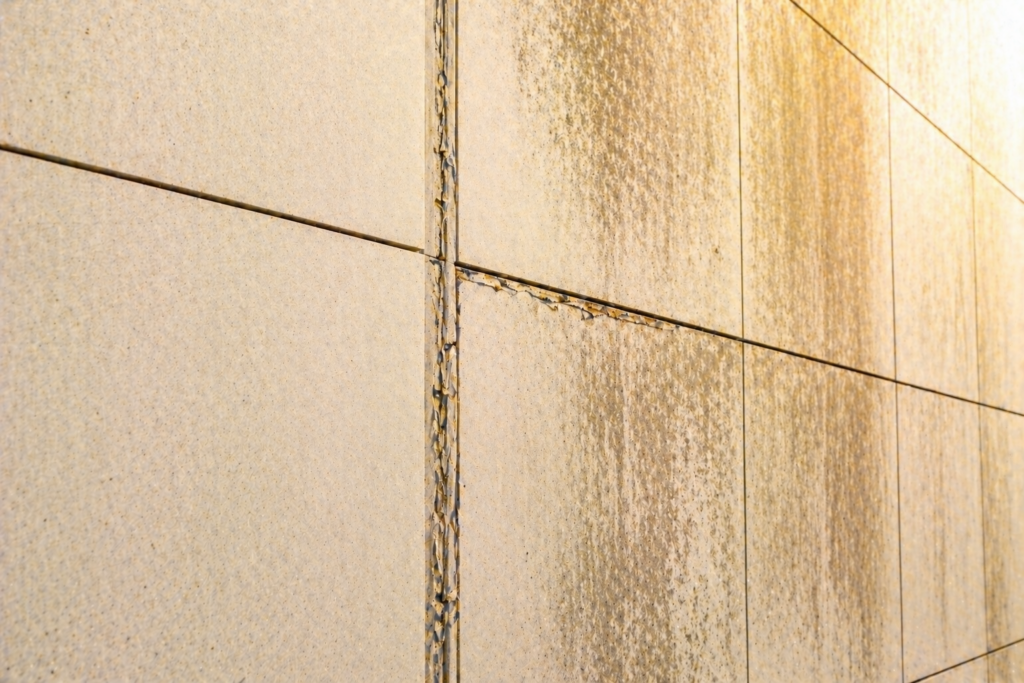
Early rebar corrosion is identifiable by non-engineers through: rust-coloured streaks running vertically or horizontally along concrete columns, beams, or slabs — indicating corrosion product migrating through concrete cover; hairline cracks running parallel to the direction of reinforcement bars (corrosion expansion creates tensile cracking along the bar axis); concrete spalling (small pieces breaking away from the surface) exposing the reinforcement within; and in advanced cases, visible rebar exposed through broken cover concrete. These signs are most commonly visible on columns near ground level (moisture accumulation zone), in balcony soffits exposed to monsoon rain, and on external columns facing the prevailing wind-driven rain direction. Any spalling visible on structural columns requires immediate assessment by a structural engineer.
What repair methods are used to treat rebar corrosion in existing Bangalore buildings?
Rebar corrosion repair follows a sequenced protocol: break out all delaminated and carbonated concrete (typically 20-50mm beyond the corrosion-damaged zone); wire brush corroded reinforcement to bright metal; apply corrosion inhibitor (epoxy-based or zinc-rich primer) to cleaned rebar; apply bonding agent to prepared concrete surface; reinstate cover using polymer-modified repair mortar meeting IS 14959 requirements; and protect with elastomeric coating to prevent moisture re-entry. Electrochemical chloride extraction or cathodic protection are used for large-scale corrosion in buildings where full break-out is impractical. Repair cost per affected column ranges from ₹15,000-80,000 depending on severity. Buildings with widespread column corrosion across multiple floors require structural re-assessment before repair to confirm repair is viable versus replacement.
At what stage of corrosion does a Bangalore building become structurally unsafe?
A Bangalore RCC building becomes potentially structurally unsafe when: reinforcement section loss exceeds 20% in primary structural members (columns, beams, or flat plate slabs); multiple columns on a floor show active corrosion with spalling and visible bar exposure; or when half-cell potential readings are more negative than -350 mV (indicating 90%+ probability of active corrosion throughout the element). IS 456 allows structural capacity reduction calculations based on residual steel section. A building with 30% section loss in columns that were originally designed with 15% safety margin has a negative structural safety margin — it is structurally compromised and should be vacated pending remediation. This condition is typically reached after 40-60 years in Bangalore’s climate without maintenance intervention, or earlier in buildings with inadequate original concrete cover.
Arpitha is the founder of Stalah, a principal-led real estate house shaped by clarity, discretion, and long-term thinking. Her approach focuses on selective mandates, thoughtful representation, and measured real estate decisions.
Related Reading: